Baltimore Peninsula

The perfect location to construct a fort to defend the city of Baltimore.

The location of Fort McHenry was not decided by chance, it was decided by geography. Any fleet of warships attempting to reach Baltimore had to sail up the Chesapeake Bay and the Patapsco River. The river splits into two parts with the northern branch leading directly to the city itself and the southern branch leading to a possible “back door” approach to the city. The easternmost end of the Baltimore Peninsula was the best natural location to build the defensive fort, Fort McHenry, to protect the city.
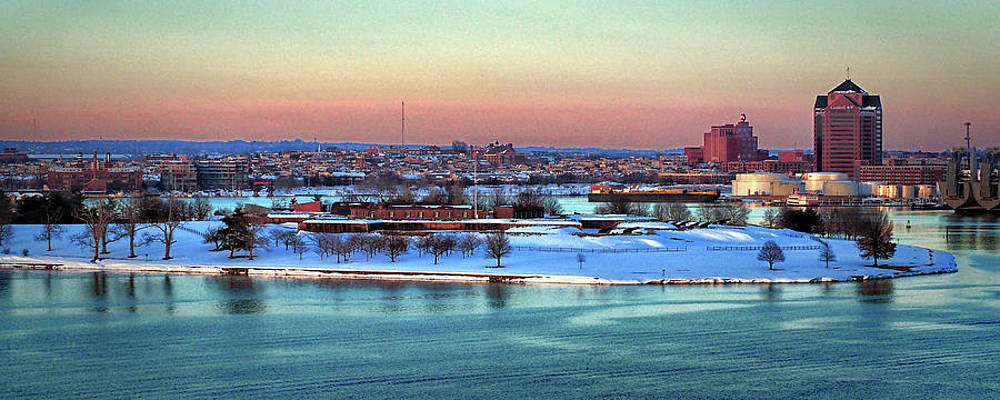
fort mchenry and the baltimore peninsula shrouded in snow
Fort McHenry and the Baltimore peninsula shrouded in snow during the Blizzard of 2016.

When the War of 1812 began, the city of Baltimore was a major point of contention between the British and Americans. The British Navy blockaded Baltimore Harbor in an attempt to cut off American trade and prevent their ships from resupplying the American troops. In response, the Americans built Fort McHenry on the Baltimore Peninsula to defend the city from attack.
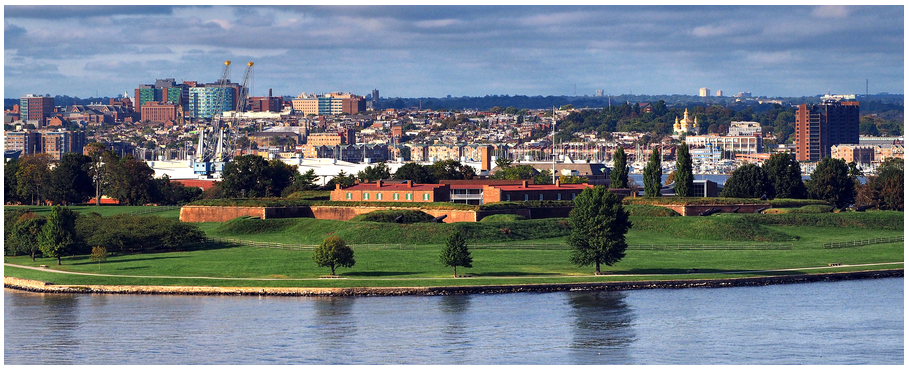
Fort McHenry was an ideal location for the defense of this important maritime port city. The Baltimore Peninsula is a long, narrow strip of land that juts out into the Chesapeake Bay. It was the perfect location to build Fort McHenry, because it provided a clear view of the bay and the ships that were approaching Baltimore. The fort was also close enough to the city to provide protection, but far enough away so that the city could not be bombarded by the enemy. The peninsula on which Fort McHenry was built was the perfect location for the defense of Baltimore. The peninsula is surrounded by water on three sides, with only a narrow strip of land connecting it to the mainland. This made it an ideal spot to build a fortification protecting the city from attack.
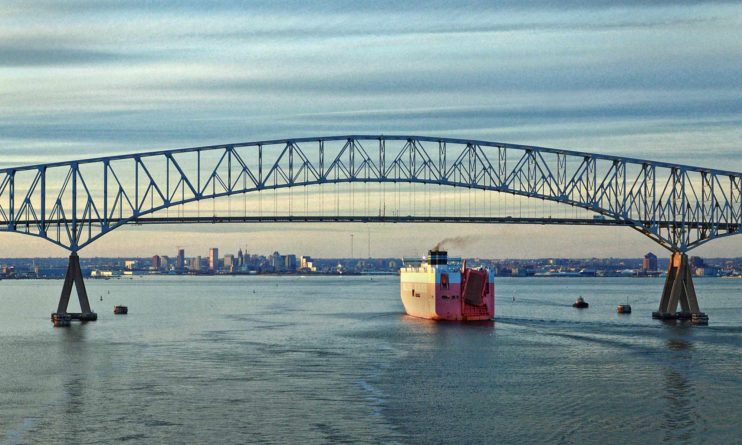
Patapsco River showing approach to the Baltimore Peninsula
Modern day Patapsco River showing the approach to the Baltimore peninsula from about six miles to the east.

Shopping link to: Fort McHenry Gallery.
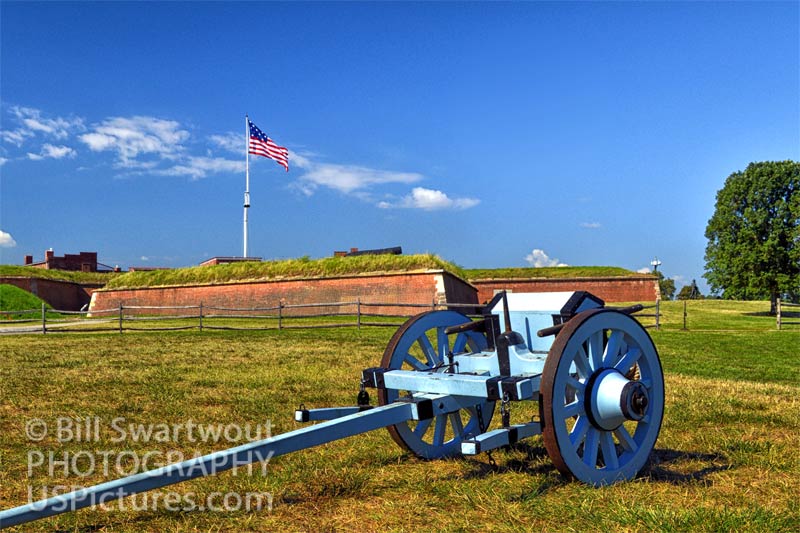

Caisson on Display at Fort McHenry

Built in 1812, this is one few surviving original ammunition caissons from the fort.

Fort McHenry: Fort McHenry is home to many historical artifacts, one of which is the Caisson. The Caisson was used to transport ammunition, cannon supplies, powder, firing tools, cannonballs and even spare wheels and other heavy equipment during the War of 1812. Today, the Caisson is on display for all to see. Visitors can learn about the Caisson’s role in the War of 1812 and how it helped shape the course of history.

fort mchenry caisson and flag
The caisson on display at Fort McHenry with the American Flag flying above the ramparts in the background.

The caisson on display at Fort McHenry is a reminder of the important role the fort played in the War of 1812. The fort was bombarded for 25 hours by British ships, but the American defenders held firm. The British finally withdrew, and the Americans celebrated a significant victory. This caisson just may be a symbol of that victory, and it stands as a testament to the courage of the American soldiers who defended the fort.


Link to Shop: Ammunition Caisson at Fort Mchenry

Link to Shop: Fort McHenry Wall Art and Home Decor


The caisson is a two-wheeled chassis carrying ammunition chests filled with powder bags and projectiles. It is attached to the trail end of the cannon on the march. When the piece is horse-drawn, a limber, also a two-wheeled chassis carrying an ammunition box, but with a long tongue for the harness, is hooked on to complete the train.